Back in Touch
Walk, garden and travel again without paying for it the next day
Stop fighting your pain or ignoring it. In 12 weeks you get back in touch with your body: the one step stretching, physio and chiro skipped. 33 minutes a day at home, with me coaching you live every Saturday.
What we work toward together
- The whole grocery run without leaning on the cart
- A long drive or a dinner out without shifting in your seat the whole time
- Down on the floor with the grandkids, and back up again
- A bad day stays a bad day, not a bad month
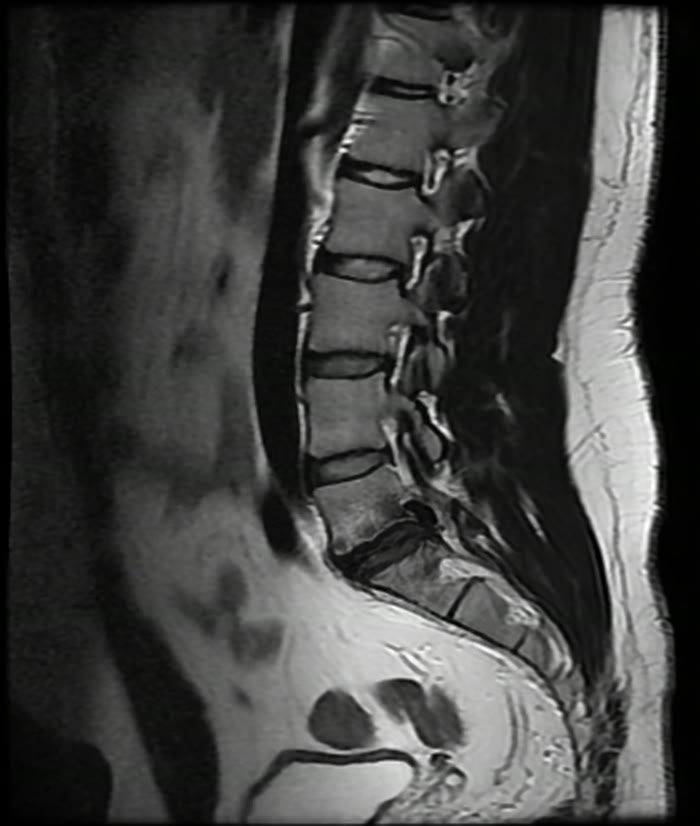

This is my spine. In 2024 a surgeon wanted to fuse it. I said no, and did the work I teach in this program instead. Today I walk, run and train. Better, not perfect.Gabriel Van der Veer, PT · physical therapist for 12+ years
Is this you?
You've done everything they told you. It still comes back.
These are the words women send me every week. If even one sounds like you, it's not because you didn't try hard enough, and it's not just your age. Every plan you tried skipped the same step: getting back in touch with your body.
Why it keeps coming back
You can't control what you can't feel
Pain pushes most of us one of two ways. We fight it: push through, stretch harder, grit our teeth. Or we ignore it and quietly stop moving the way we used to. Either way, we stop listening to our body.
Here's what most people are never told: your scan shows what changed, not what hurts. Disc bulges, arthritis and narrowing show up on the MRIs of plenty of people who feel fine. Pain is a signal from your nervous system. After months of pain, that signal can get stuck, like a short circuit, and keep firing long after the danger has passed.
And when you stop feeling how you move, small things slip. Your hips stop sharing the load. The deep muscles that should hold your spine steady switch on late, or not at all. So with every step and every bend, the load lands on the same sore spot. That's often how the pain starts, and why it keeps coming back.
Stretching calms it down for a day. Strengthening builds muscle your brain still doesn't know how to use. Neither one brings back the connection that was lost, so the pain comes back.
The good news: your brain and your body can relearn, at any age. Neurons that fire together, wire together: practise a new way of moving every day, and it becomes the way you move. When you pay attention to how you move, the way you move changes, and often the way the pain feels changes too. This part of my work is inspired by teachers like Dr. Joe Dispenza, who show how much the brain can learn again.
It just has to go in order. First you feel where the signal is getting stuck. Then you control it: you put the wires back together and calm the alarm down. Then you make it strong, so the new way of moving sticks. That's why it's called Back in Touch. My own breakthrough came when I stopped fighting my back and started listening to it. The move that helped me most looked almost silly: a tiny, gentle pelvic floor squeeze. It wasn't the exercise. It taught my brain a new way to move, and I carried it into the rest of my day. I've watched the same thing happen for the women I coach.
Reconnect with your body
Gentle moves to calm the alarm and feel your back again: where it moves, where it holds, and what the pain is telling you. Plus one relief move you can use in the middle of a walk.
Retrain your brain to hold you steady
Now that you can feel it, your brain relearns how to move you well. Your pelvis takes the load off your lower back while you walk, bend and lift things at home.
Make it last
Now strength holds, because your brain knows how to use it. You walk further, and you get back to what you love.
Everything you get
What's inside Back in Touch
- Your personal starting planYou send me your answers and a short video. I send you back a video about your back and where to start.
- 12 weeks of follow-along routines33 minutes a day at home, no equipment. Feel, then Control, then Strength. All on Skool, easy on your phone.
- A live group with me every Saturday60 minutes on Zoom. Bring your questions and I answer them live. Camera off is fine.
- Form checksNot sure you're doing it right? Send me a 30-second video and I reply with a voice note.
- Voice-note check-insStuck or having a bad week? Message me on Skool. No booking needed.
- Your walking trackerYour minutes, week by week, so you can see the progress for yourself.
- The 5-Minute Before-Bed Routine BonusFor the nights your back won't let you settle.
- The Bad-Day Plan BonusExactly what to do on a flare-up day, so you never feel lost.
- The Car and Chair Reset Bonus2 minutes for long drives, flights and sitting through dinner.
- The Back in Control workshop recording BonusThe full workshop, so you understand why this works.
Two ways to work with me
Pick the one that fits you
Private 1:1
Just you and me
for 12 weeks, or 3 payments of $3,500
- A 45-minute private call with me every week
- Your plan adjusted to you every week
- Direct WhatsApp with me, answered every weekday
- Plus the Saturday group and everything in Back in Touch
Most women don't need that. Back in Touch gives you the same method, in a small group, for a fraction of the price.
Back in Touch · founding group
The same method, in a small group
for 12 weeks, or 3 payments of $550
- Your personal starting plan
- 12 weeks of 33-minute routines on Skool
- Live group with me every Saturday
- Form checks and voice-note check-ins
- All 4 bonuses
For comparison: 12 weekly physio visits out of pocket run about $1,200 to $1,800 in the US, and that's one hour a week, with nothing in between.
The women I've helped
They thought it would always be there
"I honestly thought my back pain was just going to be there forever. Now it doesn't decide my day anymore."Carla, my wife
"Dancing was my whole life, and my back took it away. Now I play in a touch football league with no back pain."Joselyn, Germany · coached online
"I'm active and strong, and my hip pain still kept coming back. Once I learned to control my pelvis, my hip calmed down."Lorena, my sister-in-law, Minnesota
coaching
promise
You won't be left on your own
Do your part: 33 minutes a day, 5 days a week, and send me your progress every week. If by week 12 you're not better than in week 1, I keep coaching you for free until you are.
Is this for you?
It's a good fit if
- You're a woman 50 or older with back pain, leg pain or both
- You've tried physio, chiro or stretching and it didn't hold
- You can give it 33 minutes a day
- You want your active life back, not just less pain
It's not for you if
- You want a quick fix in a week
- You won't do the daily 33 minutes
- You have new leg weakness, numbness in the groin area, or bladder or bowel changes (please see a doctor first)
How to join
No sales call. Just 3 steps.
- Answer a few short questions about your back below. It takes about 3 minutes.
- I send you a personal video within 2 days, about your back and whether Back in Touch is a good fit.
- If it's a fit, you get your link to join, pay in full or in 3 payments, and we start Saturday, December 5.
Form not showing? Open the application here.
Quick questions
I'm over 60, or I have stenosis or a disc problem. Can I join?
Yes. Most of the women I work with are 50 and up, and I have stenosis myself. Every routine starts gentle, and your starting plan is built from your own answers.
What if I miss a Saturday?
That's fine. You can post your question in Skool before the session and I'll answer it, and your daily routines keep going either way.
I'm not good with technology. Will I manage?
Yes. Skool works like a simple app on your phone, and Zoom is one click. I'll show you both in your first week.
Why is there no call?
I'd rather look at your answers properly and send you a video about your own back than rush a 15-minute call. You decide in your own time, with no pressure.
Can I pay in parts?
Yes. Back in Touch is $1,500, or 3 monthly payments of $550.
Back in Touch · founding group
Picture week 12
You trust your body again, because you can feel it. You finish the whole walk, not just the first block. You say yes to the weekend trip without planning around your back. And when a bad day comes, you know exactly what to do, so it passes. And somewhere along the way, you stop thinking of yourself as the woman with the bad back. You didn't get used to the pain. You changed it.
That's what we're working toward. We start Saturday, December 5, with only 5 founding spots, so I can really coach every woman in the group.
P.S. You've already tried the things that help for a day. Back in Touch is the step they skipped: getting back in touch with your body, with me beside you for 12 weeks. And if you do the work and you're not better by week 12, I keep coaching you until you are.
Gabriel Van der Veer, PT
5 founding spots